
Radiology plays a crucial role in modern diagnostics. However, radiologists face an unprecedented workload due to the surge in imaging studies. This increased demand, coupled with a shortage of specialists, leads to delayed diagnoses and compromised patient care. This is where AI steps in, not to replace radiologists, but to optimize their workflow.
Artificial intelligence (AI) offers a solution by acting as a triage system, prioritizing critical cases for immediate review. This approach promises to significantly improve efficiency, reduce burnout among radiologists, and ultimately enhance patient outcomes. Hey, let’s explore how this works!
The Challenge: Rising Imaging Volume and Complexity
Several factors contribute to the escalating workload in radiology:
- Increased Imaging Use: Advances in technology have made imaging more accessible, resulting in a higher volume of scans.
- Higher Resolution, Larger Files: Modern imaging generates larger datasets, requiring more time for analysis.
- Shortage of Radiologists: A persistent shortage of trained specialists exacerbates the problem.
- Urgent vs. Routine Cases Mixed Together: Without effective prioritization, urgent cases can be delayed.
In emergencies, such as detecting a brain bleed or pulmonary embolism, timely diagnosis is critical. AI-driven workload balancing is crucial in these situations.
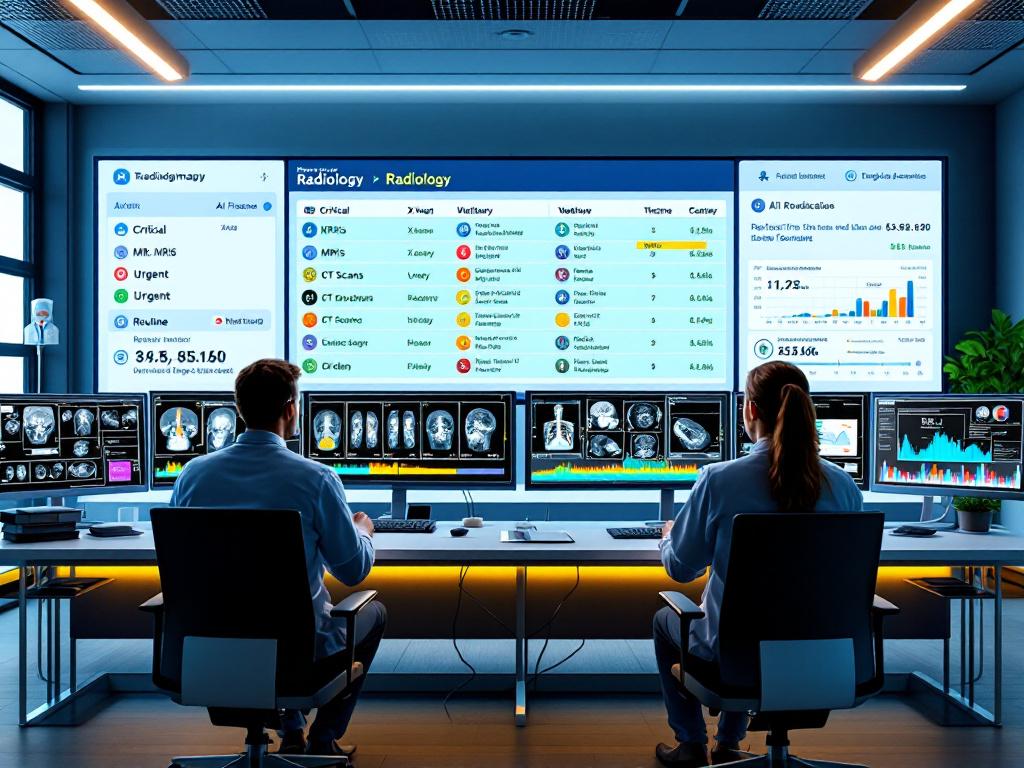
How AI Triage Works in Radiology
AI triage systems analyze images upon upload. The process typically involves:
- Automated Image Analysis: Deep learning models identify patterns indicative of urgent conditions, such as intracranial hemorrhage or pneumothorax.
- Priority Flagging: Urgent findings trigger automated flagging and prioritization in the radiologist’s workflow.
- Workflow Integration: The AI integrates with the hospital’s PACS for seamless review.
- Continuous Learning: AI systems continuously improve accuracy through radiologist feedback.
Benefits of AI-Driven Workload Balancing
1. Faster Diagnosis for Critical Cases
AI accelerates diagnosis for life-threatening conditions, enabling prompt intervention.
2. Reduced Radiologist Burnout
AI helps radiologists focus on high-priority cases, reducing burnout.
3. Better Resource Allocation
Hospitals can optimize resource allocation based on case urgency.
4. Improved Patient Outcomes
Faster triage leads to faster treatment and improved patient outcomes. Hey, that’s a win-win!
Leave a Reply