
In a world where doctors are increasingly burdened by administrative tasks, a revolutionary kind of assistant is emerging in hospital exam rooms. It’s not a person, but a powerful artificial intelligence tool known as an “ambient AI scribe.” These digital assistants are quietly listening to every word of doctor-patient conversations, transforming them into structured clinical notes in real time. While this cutting-edge technology promises to liberate doctors from the keyboard and restore the human connection to medicine, it also ushers in a new era of privacy questions and ethical considerations for the ambient AI scribe.
Understanding the Ambient AI Scribe: How it Listens and Learns
Ambient AI scribes are a marvel of modern technology, combining advanced speech recognition and natural language processing (NLP). Unlike traditional dictation software, which requires a doctor to speak commands directly, these intelligent systems operate seamlessly and unobtrusively in the background. Using sophisticated microphones or dedicated devices, the ambient AI scribe “listens” to the entire dialogue between a clinician and a patient.
It then intelligently identifies key medical terms, accurately distinguishes between speakers, and extracts all relevant information to automatically generate a draft clinical note. The doctor’s role then shifts dramatically from meticulous note-taking to a quick, efficient review and edit, drastically reducing the time spent on documentation. This fundamental change is powered by the ambient AI scribe’s ability to learn and adapt.
The impact of this technology on the medical community has been immediate and profound. Healthcare systems have reported significant reductions in physician burnout, as doctors reclaim hours once spent on clerical work. A pilot program at one major health system, for example, observed a remarkable 44% reduction in waiting times and saved hundreds of clinician hours per month. For patients, this means a more engaged and present doctor who can focus genuinely on their concerns rather than being distracted by a computer screen, thanks to the ambient AI scribe. 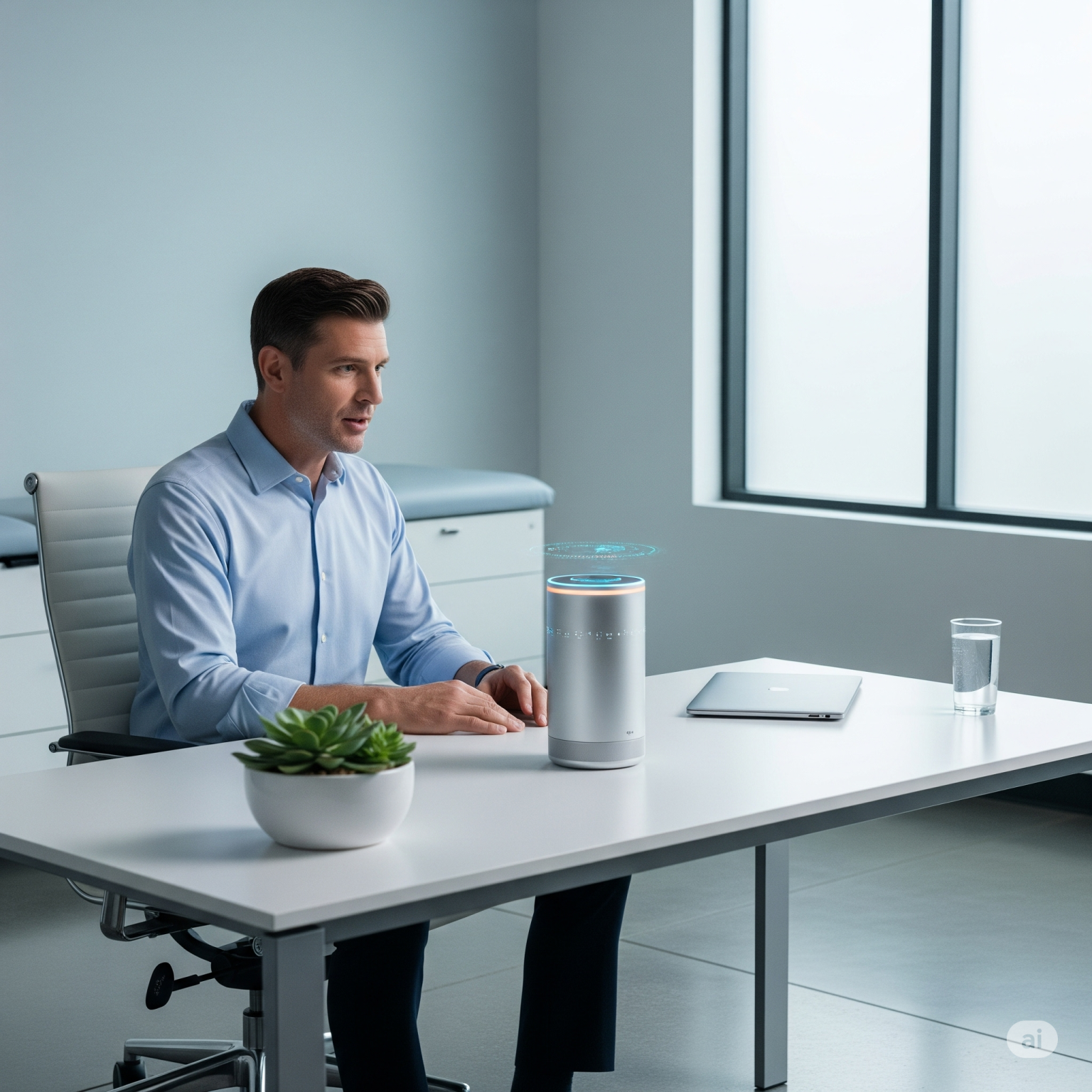
The Transformative Promises of Ambient AI Scribes in Healthcare
The benefits of integrating an ambient AI scribe into medical appointments are numerous and far-reaching, fundamentally changing the patient-doctor dynamic for the better.
- Reclaiming the Human Connection: By freeing doctors from the distraction of typing and screen time, the ambient AI scribe allows for more direct eye contact, active listening, and deeper, more personal conversations with patients, fostering trust and rapport.
- Fighting Physician Burnout: The relentless administrative burden of charting has historically been a leading cause of burnout among medical professionals. Ambient AI scribes provide a powerful antidote, giving doctors back valuable time and significantly improving work-life balance.
- Enhancing Accuracy and Efficiency: The AI’s ability to capture virtually every word spoken can lead to more comprehensive, precise, and accurate patient records. It also standardizes documentation processes, ensuring consistency and completeness across an entire healthcare system.
- Democratizing Documentation: This innovative technology can effectively assist doctors of all experience levels, ensuring that high-quality, thorough notes are produced consistently. It can be particularly beneficial for specialties with historically high documentation loads, making the ambient AI scribe a versatile tool.
Navigating Privacy and Security Concerns with Ambient AI Scribes
The introduction of an “always-on” listening device into the sanctity of a doctor’s office naturally raises significant and complex privacy concerns. While the technology is rigorously designed to be HIPAA-compliant and secure, the critical questions it raises require careful consideration:
- Patient Consent: How is explicit and informed consent obtained from patients, and how are they made to feel entirely comfortable with an ambient AI scribe recording their most private medical conversations? Transparency and clear communication are paramount.
- Data Security: Who ultimately owns the sensitive data generated, and where is the audio and text securely stored? While most systems encrypt data and promise not to use it for training purposes without consent, the sheer volume of sensitive patient information makes robust data security and the prevention of breaches an ongoing, critical concern for ambient AI scribe implementation.
Leave a Reply