
Diabetes isn’t just about blood sugar. Left unchecked, it can quietly damage the retina, leading to diabetic retinopathy—a leading cause of blindness worldwide. The tragedy is that vision loss is often preventable, if only patients were screened early enough.
Now, a new tool called SMART (Simple Mobile AI Retina Tracker) promises to change that equation. By analyzing retinal images with nearly 99% accuracy in under a second, SMART could put sight-saving screening directly into the hands of frontline clinicians—and potentially even patients themselves—using nothing more than a smartphone.
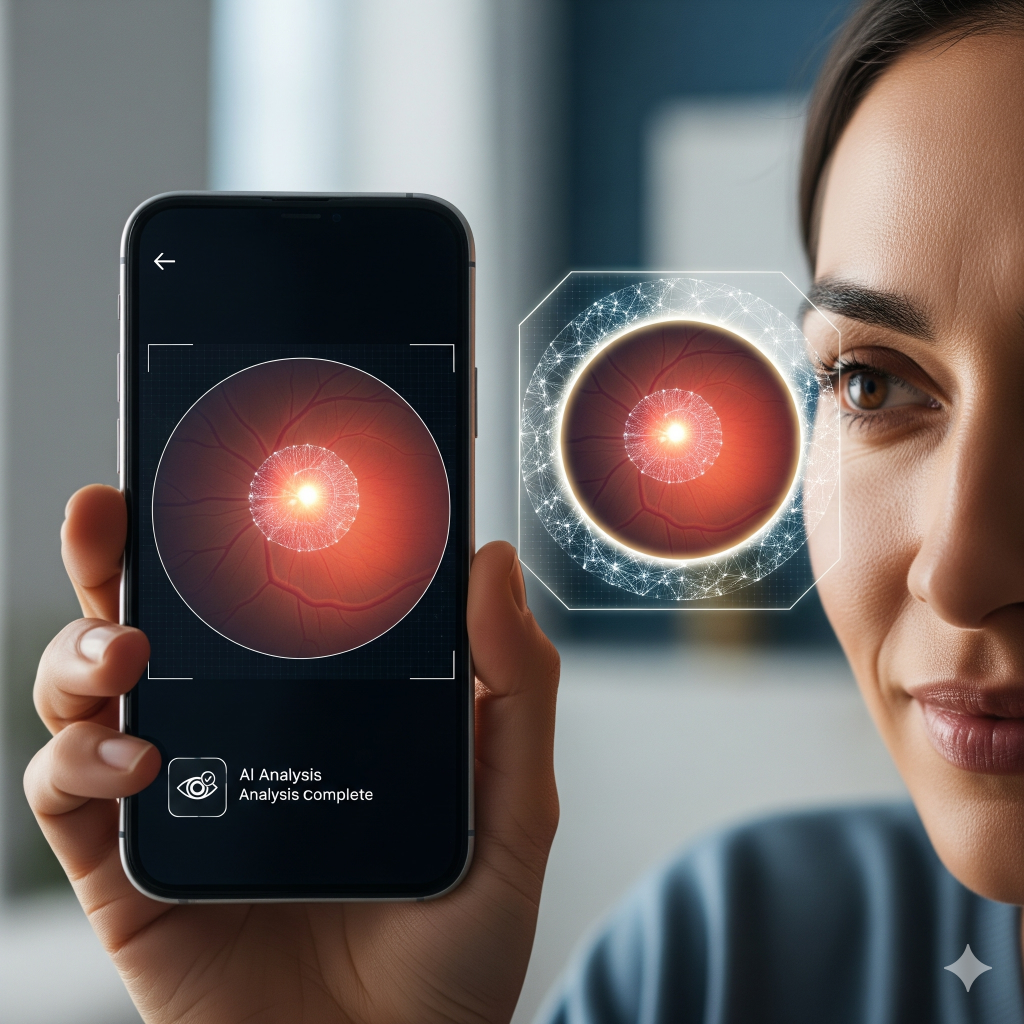
If it lives up to its promise, SMART could democratize eye care in diabetes hotspots, where millions remain undiagnosed until it’s too late.
The Technology: A Retina Lab in Your Pocket
SMART uses deep learning algorithms trained on vast datasets of retinal scans. Here’s what makes it remarkable:
- Speed: Analysis in less than a second.
- Accuracy: Detection and staging of diabetic eye disease at ~99% accuracy in trials.
- Portability: Works on mobile hardware, eliminating the need for bulky fundus cameras.
The workflow is straightforward: a retinal image is captured via a phone-compatible lens attachment, uploaded to the app, and instantly analyzed. Results are available immediately—no ophthalmologist required on site.
Why It Matters: Closing the Screening Gap
Globally, diabetic retinopathy affects more than 90 million people, with prevalence especially high in regions where access to ophthalmology is limited. In countries like India, where diabetes rates are surging, the shortage of eye specialists creates a screening bottleneck.
SMART could help close this gap by:
- Empowering primary care clinics to conduct screenings without referral.
- Scaling outreach programs in rural and underserved regions.
- Reducing costs of diagnosis, since smartphones are already widely distributed.
The Hurdles Ahead
But before SMART can transform global eye health, several questions must be addressed.
1. Can Smartphones Keep Up?
While AI models are optimized for efficiency, running them on mobile hardware in real-world conditions (low light, shaky hands, variable internet connectivity) may prove challenging. Will the accuracy hold up outside controlled trials?
2. Deployment at Scale
To be effective, SMART must be integrated into health systems:
- Training non-specialist health workers to capture reliable retinal images.
- Setting up referral pathways for patients flagged as high risk.
- Ensuring affordability in low-resource settings.
3. Long-Term Validation
The ~99% accuracy figure is promising, but long-term clinical validation across diverse populations is essential. Retinal characteristics can vary with ethnicity, comorbidities, and even local environmental factors.
4. Ethical and Data Concerns
Like all health AI, SMART raises questions:
- How is retinal data stored and secured?
- Who owns the health insights—patients, providers, or developers?
- Could false positives overwhelm already stretched health systems?
A Glimpse of the Future
If these hurdles can be overcome, SMART may represent a paradigm shift in diabetic care. Imagine:
- A rural clinic in sub-Saharan Africa screening dozens of patients daily with nothing more than a phone.
- A community health worker in India detecting vision-threatening retinopathy before blindness sets in.
- A future where screening is as simple as snapping a selfie.
The Bottom Line
SMART is more than just a clever acronym. It’s a glimpse into how AI-powered diagnostics on everyday devices could save millions from preventable blindness. But the path from pilot to population-level impact will depend on rigorous validation, equitable deployment, and the ability to integrate seamlessly into healthcare systems.
Final thought: If the eye is a window to the soul, then smartphones may soon be a window to sight-saving care. With the right deployment, SMART could ensure that diabetes steals fewer futures—and fewer visions—worldwide.
Leave a Reply