
Picture this: instead of waiting in a crowded hospital corridor, a nurse simply points a camera at you. In less than a minute, your heart rate, blood pressure, oxygen levels—even your HbA1c score—flash onto a screen. No needles. No cuffs. No waiting. Just an instant health checkup powered by AI.
This isn’t a futuristic dream. In India, at Niloufer Hospital, a system called AmruthSwasthBharath is being piloted to do exactly that. Using a combination of non-contact cameras, photoplethysmography (PPG) sensors, and AI algorithms, it promises rapid, contactless diagnostics at scale.
But as with all “too good to be true” technologies, the question lingers: how much can we really trust a camera with our health?
How It Works
The core idea is deceptively simple:
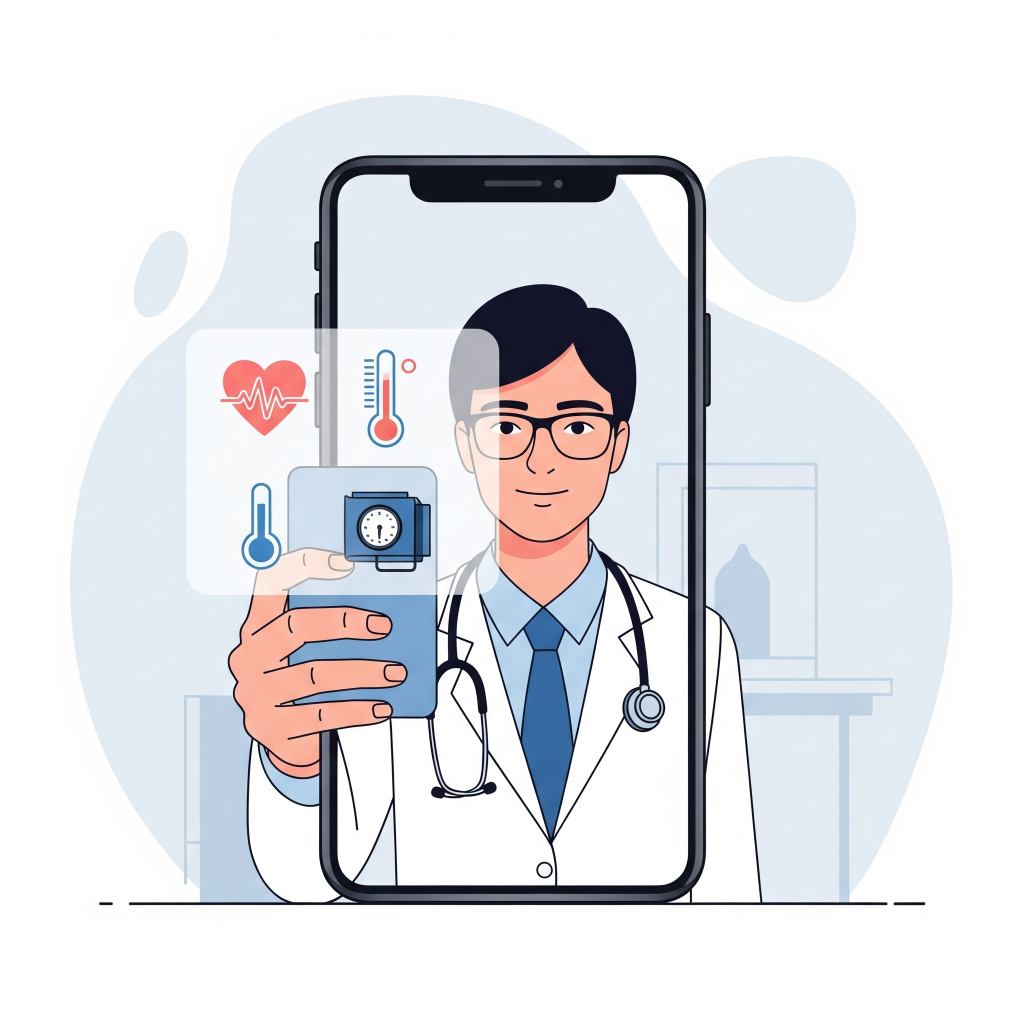
- Cameras capture subtle changes in skin color caused by blood flow.
- AI algorithms process these signals to estimate vital signs like heart rate, respiration, blood pressure, and oxygen saturation.
- In some cases, advanced models can infer biomarkers such as HbA1c, an indicator of diabetes risk.
It’s like turning your face into a diagnostic surface, where every heartbeat leaves a trace of data waiting to be analyzed.
The Promise of Contactless Health Tech
The potential advantages are enormous:
- Speed: Vitals in seconds instead of long checkup queues.
- Non-invasive: No needles, cuffs, or physical discomfort.
- Scalability: Ideal for mass screenings in schools, public clinics, and rural health camps.
- Infection control: Especially valuable in post-pandemic healthcare where minimizing contact reduces risk.
For resource-constrained health systems like India’s, the ability to rapidly screen thousands of patients could be transformative.
The Accuracy Question
But here’s the catch: accuracy.
Traditional diagnostics—blood tests, ECGs, sphygmomanometers—are trusted because they’ve been validated for decades. Contactless tools are newer, and while early studies are promising, they come with tradeoffs:
- Environmental factors: Lighting, movement, and skin tone can affect readings.
- Signal noise: Cameras may pick up irrelevant data, skewing results.
- Clinical validation: Large-scale, peer-reviewed trials are still limited.
In short, while a camera may flag potential risks, it’s not yet a replacement for the lab.
Privacy and Data Risks
Then there’s the privacy dimension. If a camera can read your vitals in a few seconds, what stops it from being misused?
- Could insurers or employers screen people without consent?
- Could governments deploy these tools in public spaces for health surveillance?
- How securely are these deeply personal biometric signals stored?
Unlike a blood test you willingly give, a camera can collect health data without you even noticing. That shifts the debate from convenience to consent.
Adoption Hurdles
Even if accuracy improves, widespread adoption faces barriers:
- Clinician trust: Doctors may be hesitant to rely on “black-box” AI readings.
- Cost and infrastructure: Hospitals must invest in specialized cameras, servers, and training.
- Regulation: Health authorities will need to establish standards for reliability and data governance.
Without careful rollout, contactless tools risk being dismissed as gimmicks rather than game-changers.
The Bottom Line
So, are camera-based health checkups the future of medicine—or just a flashy experiment? The answer is likely somewhere in between.
They’re unlikely to replace traditional tests anytime soon. But as a frontline screening tool, they could dramatically expand access, shorten waiting times, and flag risks earlier—especially in places where doctors are scarce.
Final thought: Your camera may never replace your doctor’s lab. But if it can offer a quick, reliable snapshot of your health, it could become the first step in a checkup revolution.
Leave a Reply