
When people talk about artificial intelligence, the focus is usually on breakthroughs—chatbots that can pass exams, algorithms that can discover drugs, or image generators that can mimic artists. But behind the hype lies a rarely discussed truth: every AI model comes with an invisible trail of carbon emissions and pollution that can ripple far beyond the tech world—impacting public health, especially in vulnerable communities.
Recent research on arXiv has begun quantifying these hidden costs, shining light on how the rapid growth of AI may be contributing not only to climate change, but also to respiratory illness, cardiovascular disease, and premature death.
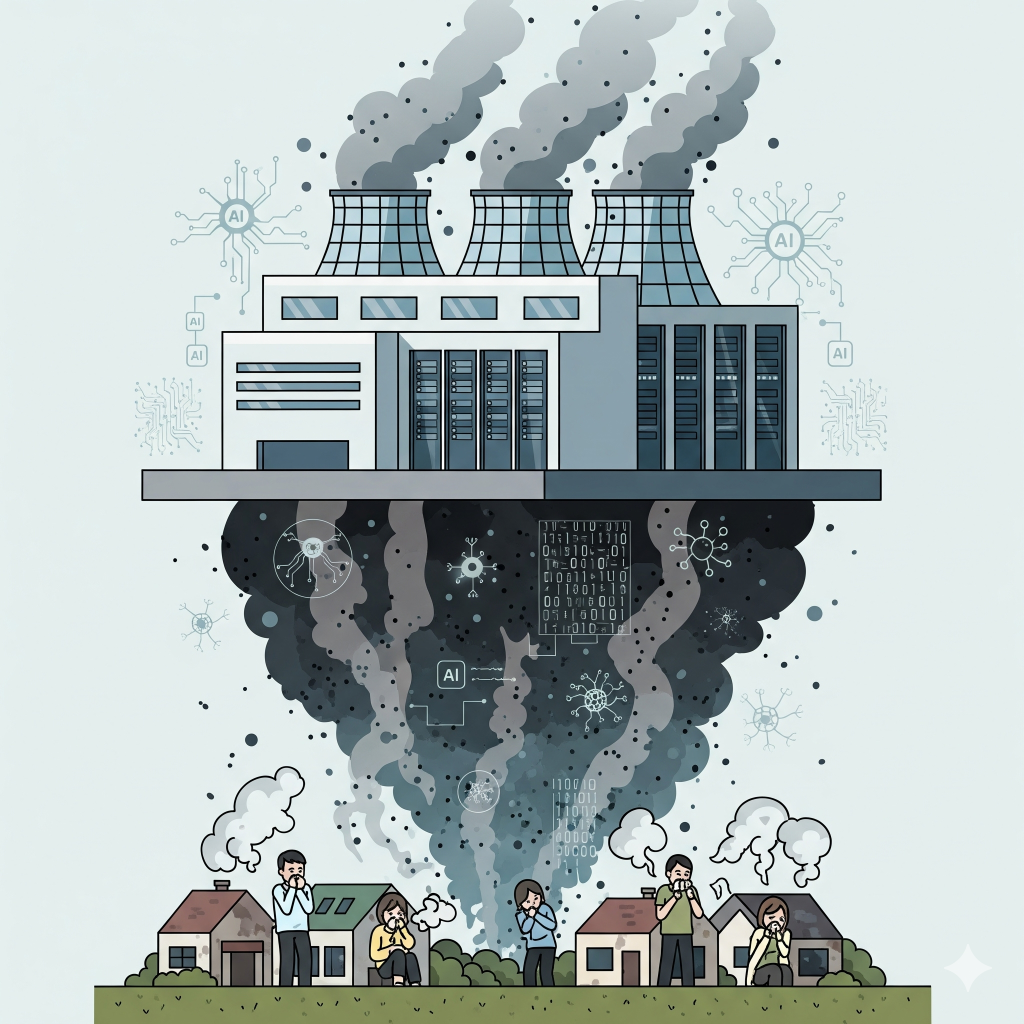
Training AI Isn’t Just Virtual—It’s Physical
Developing cutting-edge AI requires staggering amounts of computation. Training a large model can consume millions of kilowatt-hours of electricity—the equivalent of powering hundreds of homes for a year. Data centers, the backbone of this revolution, burn through energy not only for servers but also for the massive cooling systems that keep them from overheating.
That energy often comes from fossil fuels. The result:
- Carbon emissions that accelerate climate change.
- Particulate pollution (tiny airborne particles from burning coal and gas) that damage human lungs and hearts.
In other words, the costs of AI aren’t confined to silicon and code. They’re borne in the air we breathe.
The Unequal Burden of AI Pollution
The health effects of AI’s carbon footprint aren’t distributed evenly. Studies show that:
- Communities near power plants and data centers often face the brunt of air pollution.
- Low-income and minority populations are disproportionately affected, compounding existing health disparities.
- While tech companies reap profits, the health burden is often outsourced to communities with the least resources to resist.
For many, this isn’t just an environmental issue—it’s a matter of environmental justice.
Quantifying the Damage
A recent wave of research is working to put numbers on these hidden costs. Preliminary findings suggest that the emissions from training just one large AI model can contribute to:
- Hundreds of metric tons of CO₂ released.
- Particulate matter exposure linked to asthma, heart disease, and premature mortality in nearby populations.
- Economic losses in the form of increased healthcare costs and reduced productivity.
These aren’t abstract calculations. They’re measurable impacts on real people’s health.
The Ethical Dilemma for AI
The irony is stark: AI is being developed to improve healthcare, optimize energy use, and fight climate change—yet the very process of building it may be harming public health in the short term.
This raises pressing questions:
- Should companies be required to disclose the carbon and health impacts of their AI models?
- How can regulation ensure that the benefits of AI outweigh its hidden harms?
- Can innovation in green computing and renewable energy offset the damage?
Toward Cleaner, Fairer AI
The good news: solutions exist.
- Renewable-powered data centers can drastically cut emissions.
- Model efficiency research is reducing the energy required to train AI.
- Policy frameworks could ensure accountability, directing tech companies to consider health and equity alongside performance metrics.
But without urgency, the rapid scale-up of AI risks amplifying environmental and health inequities at a global level.
The Bottom Line
The future of AI isn’t just about smarter machines—it’s about the air, the climate, and the communities we live in. Every new model we train has a cost, and right now, that bill is being paid by the most disadvantaged populations.
Final thought: If AI is to truly make the world better, its creators must confront a hard truth: intelligence isn’t just measured in algorithms, but in how wisely we manage the health of our planet and its people.
Leave a Reply