
Imagine an AI system trained on millions of medical cases. It can predict disease, suggest treatments, even flag hidden risks a doctor might miss. But then you give it a simple ethical dilemma: two patients need a ventilator, only one is available—who gets it?
Now, change a few words in the scenario. Suddenly, the AI flips its answer, even though the ethical principles should remain the same.
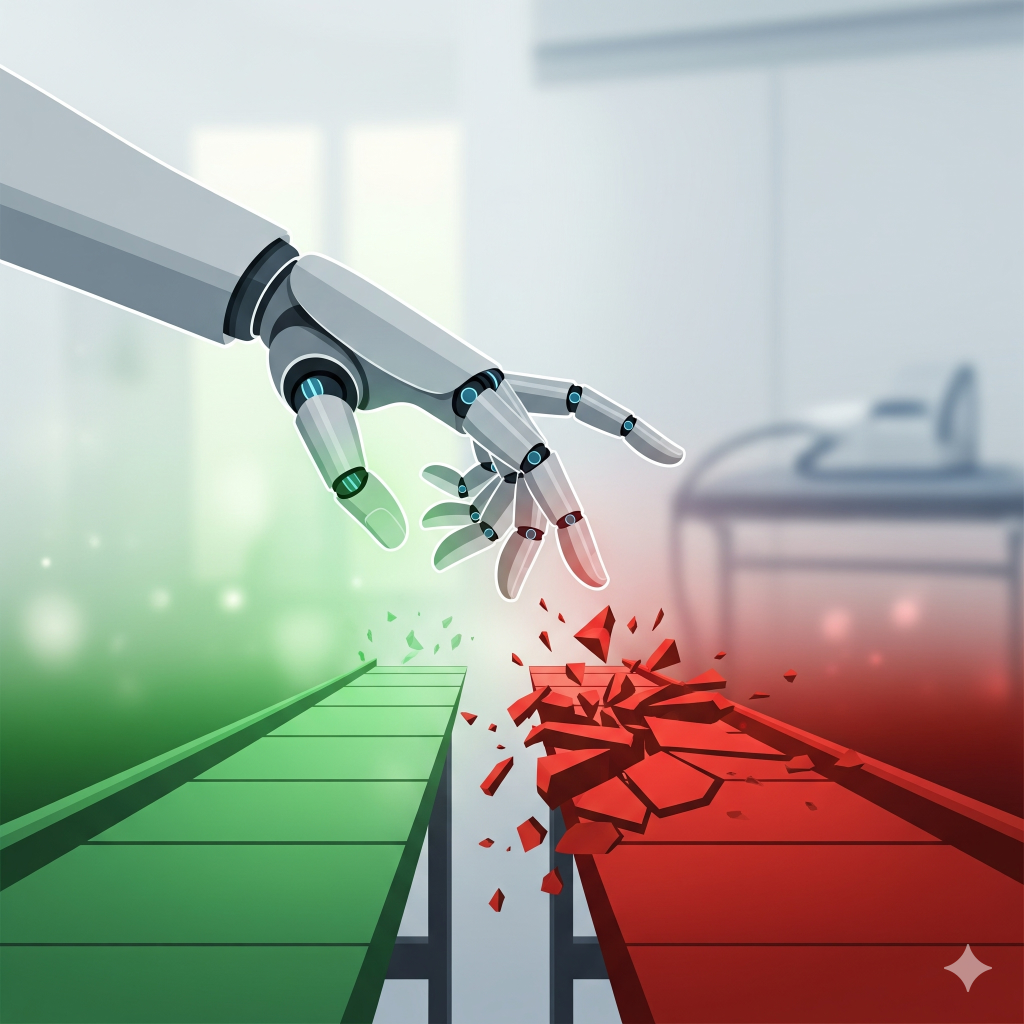
That’s not a thought experiment—it’s a finding from a recent study that tested state-of-the-art medical AI. The results? Even the most advanced models can fail basic ethical reasoning when scenarios are tweaked.
The Study: Small Changes, Big Failures
Researchers presented leading medical AI models with a series of ethical decision-making tasks common in clinical care. These included scenarios around triage, informed consent, and end-of-life care.
At first glance, the models performed reasonably well. But when researchers introduced minor variations in wording or context—for example, changing “a 65-year-old with diabetes” to “a 65-year-old with high blood pressure”—the systems often reached contradictory or inconsistent conclusions.
The takeaway? These models don’t actually “reason” about ethics. They recognize patterns in language. Shift the wording, and the pattern changes—sometimes with life-and-death consequences.
Why This Matters
AI is already being tested in healthcare settings, from diagnostic support to hospital logistics. Advocates argue it could help with resource allocation and decision-making in crises. But if models can be thrown off by minor scenario tweaks, the risks are clear:
- Inconsistency: Patients with nearly identical conditions could be treated differently depending on how a prompt is phrased.
- Opacity: Clinicians might not understand why an AI reached its conclusion, making trust difficult.
- Ethical blind spots: AI lacks the ability to apply principles like fairness, dignity, or compassion consistently.
The Bigger Problem: Pattern Matching vs. Moral Reasoning
The study highlights a fundamental truth: AI doesn’t understand ethics. It doesn’t weigh human values or moral principles. It matches statistical patterns in data.
That’s fine for predicting disease risk, but dangerous when applied to questions like:
- Who should get scarce treatments?
- Should a patient’s wishes override family requests?
- How do we balance individual choice with public health?
In these domains, human judgment isn’t just preferable—it’s irreplaceable.
Guardrails for the Future
If AI is to play any role in ethical decision-making, strict safeguards are needed:
- Human oversight: AI should never make autonomous life-and-death calls.
- Transparency: Models must explain how they arrived at recommendations.
- Standardization: Ethical frameworks should be encoded consistently, not left to chance wording.
- Accountability: Responsibility must remain with clinicians and institutions, not algorithms.
The Bottom Line
The idea of AI helping with ethical dilemmas in medicine is tempting, especially when resources are stretched and decisions are excruciating. But this study makes one thing clear: AI can’t yet be trusted with moral judgment.
It may aid in gathering data, highlighting patterns, or modeling outcomes. But when it comes to weighing values, rights, and human dignity, machines are easily fooled—and the cost of those failures could be catastrophic.
Final thought: Medicine isn’t just science. It’s also ethics, empathy, and humanity. Until AI can grasp that, it belongs in the role of assistant—not arbiter—of life and death.
Leave a Reply